Trump and the Failure of American Politics

            The Trump presidency has brought into focus just how ugly American politics has become. Of course, our politics have had a dark side long before Trump came to Washington. But the Trump era has taken us to a new low. While many Americans are aware of our dire situation, a closer examination should help concentrate our attention on the urgent need to remedy this catastrophic state of affairs.

            First, let’s look at Trump’s cabinet. He demonstrated his desire to dismantle or undermine much of the executive branch by appointing cabinet members who, in large part, had little or no expertise in the subject matter of their respective departments, e.g. Rick Perry, the new Secretary of Energy. It’s alarming that he has no background in nuclear weapons policy, a major role of the Energy Department. Or, worse yet, Trump nominated people like anti-environmentalist Scott Pruitt, Director of the Environmental Protection Agency, whose intended goals were in direct conflict with the mission of the departments they were chosen to lead.

            Next, Trump tried to intimidate his former FBI director, James Comey, into silence by threatening to release secret recordings of their conversations, which, in fact, he never possessed. At the same time, Trump ignored the real threat to our democracy, the Russian meddling in our elections, while he accepted Putin’s denials and encouraged America’s intelligence chiefs to belittle the FBI’s Russia probe.

            Then, Trump used the presidency for his personal profit; for example, doubling the membership fee at his Mar-a-Lago private club after he became president. At the same time, Trump’s companies continue to register trademarks in foreign countries since his taking office, which is not only ethically questionable, but likely violates the Constitution. The list of Trump’s abuses of presidential power goes on and on.

            Most recently, Trump intensified his assault on the media with a tweet of a video showing him tackling and beating someone who clearly represented CNN. Such outrageous messages could very well lead to physical attacks on members of the media, or worse.

            What’s just as troubling, however, is the fact that almost nothing is being done to curb or halt Trump’s un-American abuses of the presidency. Yes, Congress and the independent counsel are investigating Trump’s activities. But, these investigations could drag on for months, if not years. Meanwhile, Trump’s Republican Party seems unable or unwilling to take any action to rein him in. While some Republican officials call Trump’s behavior disturbing, they cower and do nothing. Their failure to stand up to Trump and protect our democratic values exposes how little they really care about the future of the United States or their constituents.

            Unfortunately, the Democratic Party is not much better at pushing back against Trump’s corrupt politics. As the minority party with very little power, they still blast him on television and file lawsuits to deter him. Democratic senators, however, could bring Senate business to a practical standstill through numerous time-consuming procedural hurdles. Additionally, they could use the filibuster as frequently as the Republicans did against Obama, which was a record-breaking number of times. In any event, Trump pays little attention to them and continues to trample on our civil liberties and dismantle our regulatory protections. Our democracy is sadly crumbling before our very eyes and respect for our country around the world is plummeting.

            Nevertheless, there may still be reason for hope. The resistance to Trump and his Republican enablers is growing among the American people. In the most recent Gallup Poll, only 37 percent of Americans approved of Trump’s performance. The GOP Senate version of Trump’s healthcare plan received a dismal 17 percent approval rating. And, around the country, more and more Americans want Trump impeached. Last week forty-five marches calling for his impeachment occurred in cities across the country.

            So what is the cure for Trump’s plague on America? We, the people! The key is building a broad-based, massive grassroots movement, which presents a positive alternative to Trump’s destructive administration. Beyond resistance, Americans must organize a Democracy movement to replace Trump’s regime. This must include a coming together of disaffected Republicans as well as Democrats and Independents, ethnic minorities, rich and poor, and all the various interest groups whose issues Trump has ignored or derailed.

            Next month at the University of Minnesota in Minneapolis, the Democracy Convention (See https://www.democracyconvention.org) will bring people from all sectors of society together to unite them “in a common, deeply rooted, broad based, movement for democracy.” In addition, Our Revolution (See https://ourrevolution.com), which arose out of Bernie Sander’s presidential campaign has a progressive agenda for America’s future that is gaining a good deal of support. Indivisible (See https://www.indivisibleguide.com) is yet another group fighting to reverse the Trump fiasco. It is happening, but it will take all of us rolling up our sleeves and working together. I urge you not to sit on the sidelines. Join the millions of Americans who are mobilizing to save our crippled democracy.

America on Trial

We, the people, are being severely tested. While former FBI Director James Comey testifies before the Senate Intelligence Committee about President Trump’s alleged obstruction of justice, and Special Prosecutor Robert Mueller investigates whether the Trump campaign colluded with Russia to affect the outcome of our 2016 elections, it is the American political system which is actually on trial. In these most difficult times, will we, the people, stand together, demand the complete truth and see that our Constitutional principles are upheld?

            Though a significant element on the left is up in arms, a great many Americans seem willing to let the government’s lengthy, investigative process take its course. At the same time, a sizable segment of the population is lost in despair or has given up on our broken political system altogether. Meanwhile, Trump and his plutocratic gang continue to plunder our national treasury, destroy our environmental protections and damage our international relations.

            So much is at stake now. If we care about our children’s future, our communities as well as the environment, then we must do whatever is in our power to overcome this tyranny of greed and self-interest, which Trump represents. While the United States has a mixed record, at best, in this regard, we cannot lose sight of all that is good in our nation, most importantly, the great many hard-working, generous and compassionate people who constitute the heart and soul of this country.

            Unfortunately, both the Democratic and Republican parties have proven unable or unwilling to meet this challenge. Our political leaders are too beholden to special interests and their corporate sponsors to overcome these dark forces and truly serve the best interests of our nation. Additionally, most Congressional Democrats fall into the camp of supporting the drawn-out investigative process. As usual, they prefer taking what they consider “the safe path.” In any event, as the minority party, the Democrats do not have the Congressional power to initiate impeachment proceedings against our corrupt President.

            The Republicans, on the other hand, are too fearful of Trump’s loyal base to put our country before their party. They would rather curry favor with their wealthy donors by giving them more tax relief, while standing by and watching as Trump destroys America’s reputation in the world and our relations with our allies. It seems Republicans have no shame as they continually acquiesce to Trump’s self-serving, corrupt dealings with Russian oligarchs and his demeaning of anyone or any institution that fails to go along with his unethical and arrogant behavior. The Republican Party has sold its soul to the devil of expedient power.

            So, what are we, the American people, to do? We can sit back, glued to our televisions, watch this political drama unfold, and hope for the best. Or, we can take matters into our own hands. To do that, however, we must build a diverse, nonpartisan, grassroots democracy movement capable of successfully challenging Trump and his corrupt practices. This movement would speak to the real needs of the people and provide inclusive, democratic alternatives to Trump’s authoritarian policies. Additionally, it would reach out to the millions of disaffected Americans who feel left behind by both parties.

            Fortunately, such a movement is beginning to emerge following the disenchantment of the 2016 election. Last weekend in Chicago, four thousand activists attended the People’s Summit. They focused on “seizing power into their own hands through a new wave of progressive candidates, as well as continuing to keep their people’s revolution alive through demonstrations and disruption on the streets.” (See https://www.commondreams.org/views/2017/06/12/peoples-summit-vows-transform-resistance-power.) As keynote speaker Senator Bernie Sanders exclaimed to the roaring crowd, “…when we stand together, there is nothing that can stop us.”

            Are you ready and willing to unite and meet the awesome challenge to restore our democracy?


It’s All About the Money

In case you were wondering why my blog has been silent for the last month or so, I recently returned from a long, but rewarding, four-week, cross-country journey from Santa Fe to New York to attend my daughter’s college graduation, the 50th wedding anniversary party of old friends and several other events along the way. But now that I’m back, I intend to write at least one, hopefully two, blogs a week on the challenging issues we Americans face in 2017.


While a great deal has transpired in the last month, nothing was more troubling than Trump’s decision to withdraw the United States from the Paris Climate Accord. At the same time, however, this reckless, ill-conceived move may have a silver lining, which we will address in a few moments.


First, let’s get to the heart of the matter: It’s all about the money. While Trump claims that the Paris agreement was bad for American workers, it appears that it was the financial influence of the oil, gas and coal industries that won the day. On May 25, 22 Republican senators, led by Jim Inhofe (R-OK) and John Barrasso (R-Wyo), signed a letter to Trump urging him “to make a clean break from the Paris agreement.” The letter argued that the Paris deal threatened Trump’s efforts to rescind the clean power plan, an Obama-era set of regulations and guidelines that include emissions caps and other rules deemed onerous by the fossil fuel industries.


What the letter did not address is the close alignment of these senators with those industries. According to the Center for Responsive Politics (CRP), the 22 signatories had received over $10 million in campaign contributions from the fossil fuel industries since 2012. Trump himself collected over $900 thousand in contributions from these same sources during his 2016 campaign. (Over the course of his political career, Inhofe alone has received over $1.8 million in contributions from oil and gas concerns.) Moreover, CRP found that visible donations to Republicans, the party of climate change deniers, from the extractive industries exceeded donations to Democrats in the 2016 election cycle by a ratio of 15-to-1. With this kind of financial persuasion, could there be any doubt thatTrump would decide to withdraw from the Paris agreement?


Now for the silver lining. Trump’s decision with the backing of many Congressional Republicans will only further energize the opposition to his administration and its inhumane policies. The Climate Change movement is strong and growing. A clear and striking line has now been drawn between the Republican supporters of the polluting fuel industries and the millions of Americans who want to protect their families and our planet from the disastrous consequences of climate change. The movement now has a very powerful argument against Republican climate change deniers in the 2018 elections and Trump in 2020: It’s all about the money.
 

How To Overcome the Power of Big Money

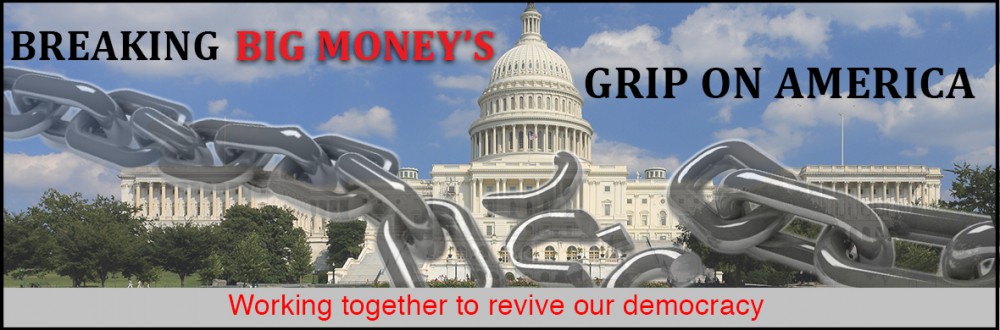
In a recent blog, “Can the American People Overcome the Power of Big Money?,” I wrote “the common denominator that prevents the enactment of real, positive solutions to practically every issue Americans face is the power of Big Money.” After exploring the problem, I proposed that a massive, grassroots Democracy movement was the only viable way we, the people could succeed in reviving our democracy.

            Throughout the history of the United States, time and again the American people have come together to advance social justice. From the Abolitionists and Women’s Suffrage movements to the Civil Rights, LBGTQ and other people’s movements, we have beaten great odds and overwhelmed the status quo. Now we are, once again, called to do just that.

            What might a Democracy movement look like and what would be its mission and goals? First, to be effective, such a movement must include a broad range of the political spectrum. Without far-reaching support, this movement will not have the necessary political weight to achieve the systemic, democratic reforms required to establish a truly just society. Therefore, the movement must be non-partisan and involve Republicans and Democrats; conservatives, moderates and liberals; Independents, Libertarians and progressives.

            Second, the movement must be grassroots and give people reason to believe their involvement will be beneficial to their lives. Moreover, the movement needs to include a vast majority of the population from all sections of the country. People must feel that they have a stake in such a movement. Although a Democracy movement may seem irrelevant to people’s everyday lives, illustrating how Big Money’s grip on government adversely affects average Americans can persuade them to get involved. People need to feel personally linked to the movement’s purpose as well as grasp the value of its potential benefits for themselves and others. The more deeply connected people are to a movement’s values and goals, the more likely they are to become actively involved.

            And, third, in order to build massive and inclusive backing, a Democracy movement needs a clear, powerful and convincing message that resonates with most Americans. That message might go something like this:

Big Money and Corporate America control our government. They buy politicians’ loyalty and unduly influence them with huge campaign contributions and very substantial lobbying efforts. We, the American people, are the big losers in this legally corrupt system. We support these politicians by volunteering in their campaigns, voting for them and paying their salaries with our hard-earned tax dollars. Yet, they repeatedly pass legislation (e.g., huge subsidies for the oil industry and bailouts for Wall Street banks), which favors Big Money and Corporate America at our great expense. The truth is our government does the bidding of Big Money while it very often disregards the common good and the wellbeing of most Americans. In fact, the United States has become a plutocracy, a nation ruled by and for the benefit of the very wealthy. In order to overcome the power of Big Money, Americans of all political persuasion must join together and build a nationwide, non-partisan, grassroots movement to revive our democracy.

The mission of a Democracy movement would be to remove the corrupting influence of money in politics and make the government work for all the people of the United States. To accomplish this mission, the movement would work to achieve at least the following goals:

  1. Establish mandatory public financing of all congressional and presidential elections. Until we have a level playing field for all candidates who meet the qualifications to run for any particular office, we will not be able to eliminate the undue influence of Big Money.

  2. Enact a constitutional amendment to reverse the Supreme Court’s Buckley v. Valeo, Citizens United, and McCutcheon v. FEC decisions finding that money is speech, corporations are people, and restrictions on campaign contributions violate the freedom of speech. As long as these rulings stand, we will not be able to control the overriding power of Big Money.

  3. Reform and strictly regulate lobbying so that all Americans have equal access to their elected officials regardless of their income, corporate position, or labor affiliation. For the voices and opinions of all Americans to be heard, we must have equal access to our elected officials.

  4. Eliminate the gerrymandering of congressional districts so that each state’s delegation to the House of Representatives is proportionate to the votes each party receives in that state’s elections for Congress. In order for the people of any state to be fairly represented in Congress, as well as in their state legislatures, districts must be fairly drawn by independent commissions without favoring one political party over another.

  5. Enact a constitutional amendment to eliminate the Electoral College so that every citizen’s vote for president carries the same weight and the president is elected solely on the basis of the national popular vote. Since the president represents all the people, the weight of a person’s vote should be the same regardless of where he or she may live.

  6. Establish a national Bill of Voters’ Rights guaranteeing all citizens of the United States an equal opportunity to vote and eliminating restrictive voter ID requirements and other efforts obstructing people’s right to vote. In a democracy all citizens’ right to vote should be guaranteed and protected.

While these are fundamental changes to our political structure that will be very difficult to establish, strong, bold actions are required to fix our broken system and put control of our government in the hands of the people. Half measures will not do. Consequently, only a massive, non-partisan, grassroots movement will have the ability to overcome the power of Big Money and revive our democracy.

See breakingbigmoneysgrip.com for how you can help build a Democracy movement.


America’s Political System Thrives on Corruption

            Big Money has a stranglehold on our country’s political system that is destroying our democracy. Today in Washington and in our state capitals too often Big Money calls the shots. Moreover, this problem is not a partisan issue. Members of Congress on both sides of the aisle as well as presidential administrations of both parties are frequently guilty of unduly favoring the desires of their Big Money donors over the needs of their constituents. The truth is, we have a system that thrives on corruption, and it’s getting worse all the time.

            While Donald Trump appears to have taken public corruption to a whole new level, by no means did it begin with him. Recent American history is full of examples. For instance, in 2002 Rep. Billy Tauzin, a Republican from Louisiana and then Chairman of the House Energy and Commerce Committee, drafted the Medicare prescription drug bill, which created Medicare’s prescription drug benefit. In his final Congressional election for Congress that same year, Tauzin received close to $300,000 in campaign contributions from health professionals, drug makers and other health products companies. The bill Tauzin drafted in 2003 followed the industry’s desires. It steered clear of price controls and forbade our government, the largest purchaser of prescription drugs, from negotiating with drug manufacturers to secure lower prices for Medicare beneficiaries, which is why today we still pay the highest prices in the world for our prescription medicines.

            But, that’s not all. The year after Tauzin drafted the Medicare drug benefit act, he left Congress and went through the revolving door between government and K Street, where a great many lobbyists work, and was hired by the drug industry. PhRMA, the pharmaceutical industry’s lobbying arm, rewarded Tauzin for writing the drug bill to its liking by hiring him as its president with a salary of approximately $2 million a year.

            Tauzin’s payoff would be unbelievable except for the fact that that is the way Washington actually functions. Retiring from Congress and becoming a lobbyist for a much heftier salary is a fairly common practice. According to one study, 42% of House members and 50% of senators become lobbyists when they leave office. Not only do they make a lot more money when they “retire,” so to speak, but also they automatically have built-in access to members of Congress, having worked with many of them when they themselves were in office. You might say many of our representatives, with the help of corporate America, have made corrupting their public service standard operating procedure.

            A few years later, the Great Recession of 2008 struck our nation. Millions of innocent people lost their homes and/or jobs when the economy crashed. Though the economic disaster was mostly due to the unscrupulous and fraudulent practices of Wall Street’s big banks, the Obama administration allowed practically all of those bankers to get off scot-free. Could the facts that some of Obama’s biggest donors during his 2008 campaign were Wall Street banks, and that he appointed a number of Goldman Sachs people, like Larry Summers, Gene Sperling and Rahm Emanuel, to important positions in his administration have had something to do with his failure to hold the bankers accountable?

            In addition, despite the fact that the TARP legislation (Troubled Asset Relief Program) included instructions to use a portion of the funds to prevent the foreclosure of people’s homes, President Obama not only used little or none of it to assist those distressed homeowners, but he also refused to extract foreclosure relief measures from our nation’s biggest banks in return for the huge bailout they received. Was neither prosecuting the big bankers nor extracting foreclosure relief from them Obama’s way of paying back Wall Street for their helping him win the White House?

            Of course, Obama’s was not the first Democratic administration to look out for Wall Street at the expense of the American people. In the 1990s, Robert Rubin served as Treasury Secretary in the Clinton administration. A former Goldman Sachs co-chairman, Rubin used his influential position to gain repeal of the Glass-Steagall Act, which had separated investment banking from commercial banking since the days of FDR, and had thus protected ordinary Americans’ bank deposits from being wagered by investment bankers in the risky trading of future derivative swaps and other exotic, often fraudulent securities. Rather than protecting the interests of average American investors and homeowners, Secretary Rubin’s efforts supported his Wall Street friends. Repealing Glass-Steagall allowed the Big Banks to gamble with depositors’ money. Consequently, to a great degree, we have Pres. Clinton, Rubin and his bank buddies to thank for the crash of the housing market and the Great Recession of 2008. Even today, many Americans are still struggling to recover while the big bankers are doing better than ever.

            Now President Trump and his billionaire Republican friends are running our government. Given all the prior corrupting influence of Big Money in Washington, it’s quite likely that their financial interests will also play a significant role in how our nation’s policies are determined. Rex Tillerson, the new Secretary of State and former head of Exxon Mobil, and Steve Mnuchin, the recently appointed Secretary of the Treasury who previously worked for Goldman Sachs, are just two members of Trump’s cabinet whose policy decisions may very well be swayed by their private financial affairs.

            As for Trump himself, it’s all about the money. He reportedly was offered up to a 19% stake in Rosneft, Russia’s largest oil company, in return for his lifting the sanctions imposed on Russia by Pres. Obama. Subsequently, a similar portion of Rosneft was sold to a mysterious partnership partly owned by a shadowy company in the Cayman Islands, the ownership of which is unknown, according to Reuters. And then the sanctions were, in fact, relaxed.

            Moreover, last month the Chinese government granted President Trump and his business valuable trademark protection for the use of the Trump name in the construction industry, something he had been seeking for more than a decade. While Trump had fought unsuccessfully in Chinese courts for years for control of the trademark, in November, soon after the election, China awarded the trademark to the Trump Organization.

            And, yet another example of Trump’s corruption of the presidency is his pay-to-play scheme at his private, Mar-a-Lago, Palm Beach resort. Soon after he became president, Trump doubled its initiation fee to $200,000. For Trump, the presidency is all about using it for his personal gain. The question is: How long will the American people put up with all this corruption?

            Bruce Berlin is the state coordinator of New Mexicans for Money Out of Politics and the author of Breaking Big Money’s Grip on America. See his website at www.breakingbigmoneysgrip.com.